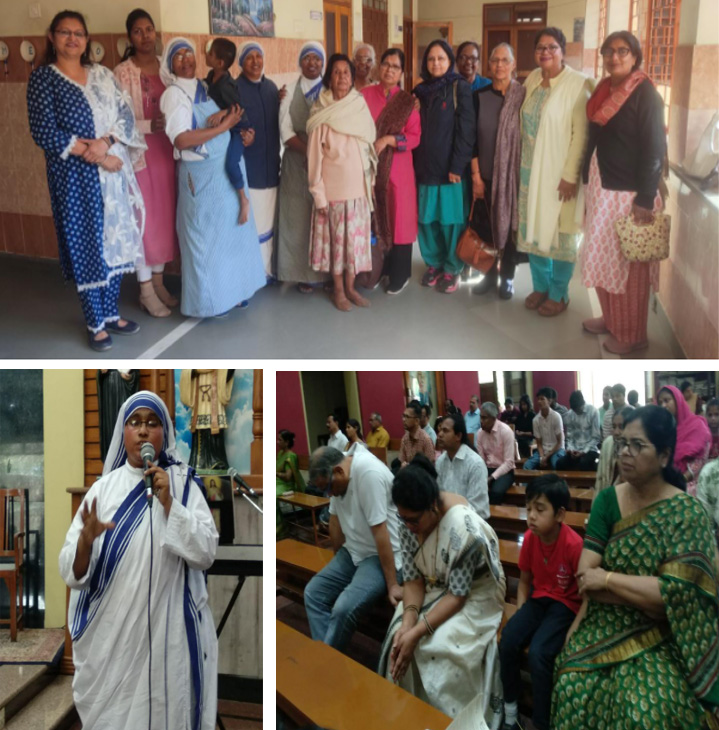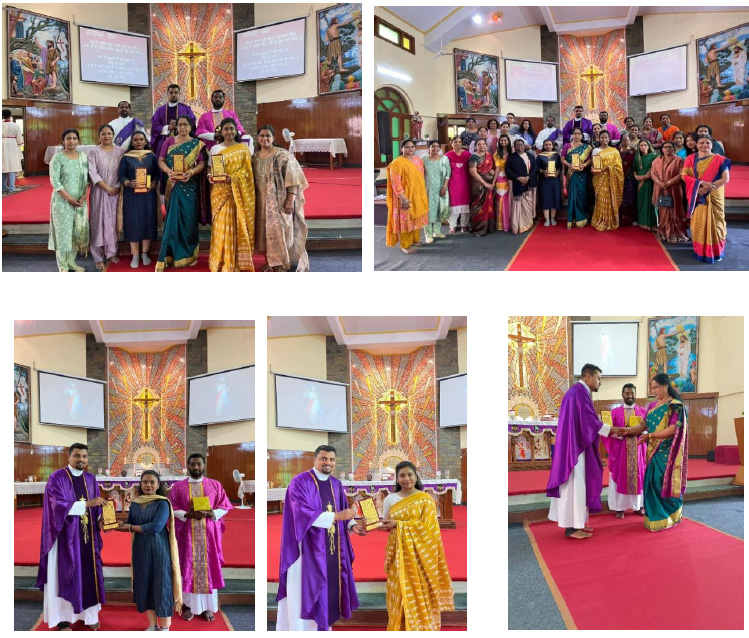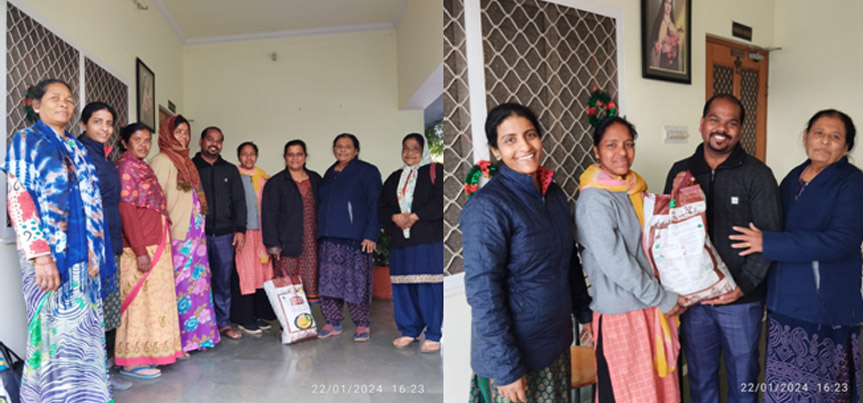
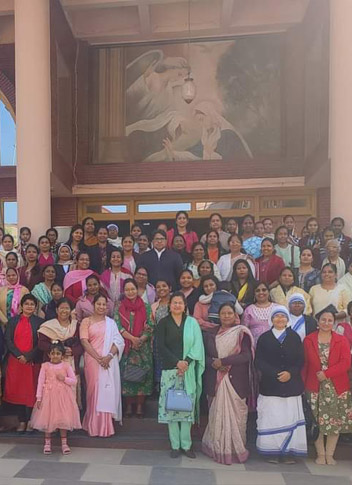
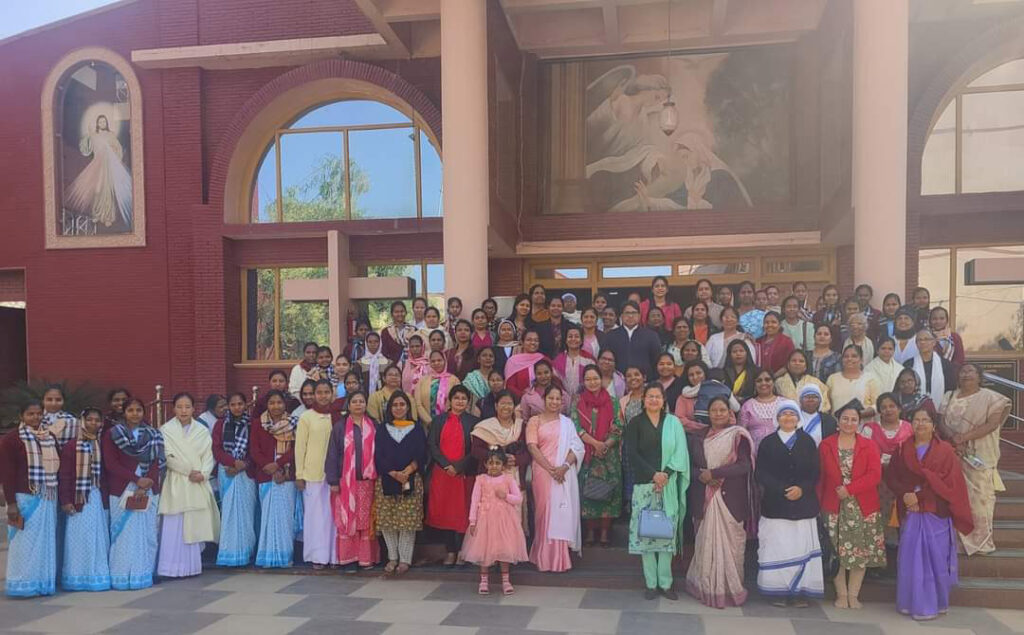
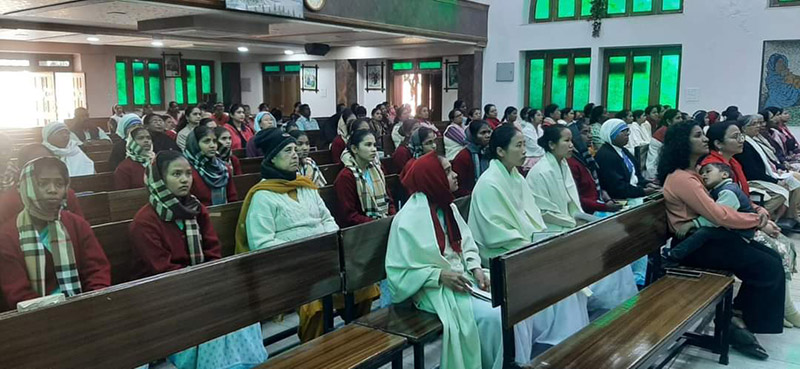
Commission for Women,Diocese of Jaipur organized a talk on Women in the New Testament on 12th Feb 2023 at Our Lady of Annunciation Church,Malviya Nagar.The resource person was The Director of the Bible Commission,Rev.Fr.Ronald Fernandes.Over 100 women from all over the Diocese availed this golden opportunity.
The importance of discussing what the biblical texts say about women – and how we should understand what they say – becomes more urgent with every passing day. The truth is this: Justification is there, in the New Testament, for whatever view one wants to espouse on women. If you want to justify women’s leadership in the church, you can turn to the Gospels, where Jesus travels with and accepts support from women (e.g., Luke 8:1-3). If you want to argue for female submission, you can draw on 1 Cor. 14:34-35 (“Women should be silent in the churches. For they are not permitted to speak, but should be subordinate, as the law also says … it is shameful for a woman to speak in church …”); or 1 Timothy 2:11-12 (“Let a woman learn in silence with full submission. I permit no woman to teach or to have authority over a man; she is to keep silent”).
If you want to make a claim about women based on the texts in the New Testament, you can find your verses. The texts simply do not speak with one voice regarding women. How, then, should we adjudicate between these disparate messages, especially as Christians who hold these texts to be the Word of God for the people of God? How can we hope to communicate with Christians who hold different views about women/gender if we do not understand their approach to interpretation?
Interpretive Approach 1: Extract and Apply
From this perspective, if God’s Word is universally applicable in every time and place, then we can and should extract New Testament passages from their historical settings and apply them in a straightforward way today.
Approach 2: Contextualize
The second major approach is to situate specific New Testament passages historically and literarily in order to determine their meaning. These practitioners might point out that women typically weren’t educated in the ancient world. Thus, the reference to Eve being deceived in 1 Tim. 2.14 doesn’t mean all women everywhere are easily deceivable; it means that the women in that community were being deceived by teachers of false doctrine (mentioned in 1 Tim. 1.3) because they were uneducated.
When we’re frustrated or baffled by other Christians’ positions on women, we ought to engage on the level of interpretation, understanding their approaches to the text and being clear about our own.
Women’s Commission extends its heartfelt gratitude and thanks to Rev. Dr. Ronald Fernandes for an awakening session.
Neelam Chopra
Executive Secretary, Commission for Women
Diocese of Jaipur